Built in a Closet: The Structural Problem Nobody Wants to Admit
I was hired as wine director for Somerset, a Boka Restaurant Group opening on Chicago’s Gold Coast. This restaurant was an architectural flex—a gleaming new vision rising from the bones of a 1920s landmark, the historic Cedar Hotel, with its brick-and-terra-cotta façade now fronting 18 stories of glass and ambition.
AvroKO designed it like an homage to the country club era, all warm golden tones and jade banquettes, this airy double-volumed space with high ceilings and an exhibition kitchen you could watch from the mezzanine. There was a rooftop bar on the 18th floor with views of Lake Michigan. Private dining spaces. An elevator that climbed through the whole thing. This was a 300-seat elevated dining operation run by one of Chicago’s most acclaimed chefs. A massive design dressed in Michelin-star aesthetics. The kind of restaurant that demands to be photographed.
During training, I repeatedly asked about the wine room. I obviously wanted to see how they organized inventory and what cellar management systems they had in place, so I could understand how to run service. But each time I asked, they met me with silence, deflection, the kind of avoidance that felt intentional. Two nights before opening, someone finally said it: there is no wine room.
A behemoth of a restaurant opening in two days with no wine room, no infrastructure, and no plans for operating during service. They hired me to work within a system that didn’t exist. I was pissed. I was so fucking pissed. And honestly shocked.
Shocked that a company renowned for its restaurants could have this kind of oversight and lack this kind of integrity. But I didn’t have time to sit with the anger. I didn’t have time to process how negligent and irresponsible this was. I had to act. So I took the coat closet. Then I ended up with Diego, a food runner who had absolutely no obligation to help but became this kind of patron saint of the whole operation.
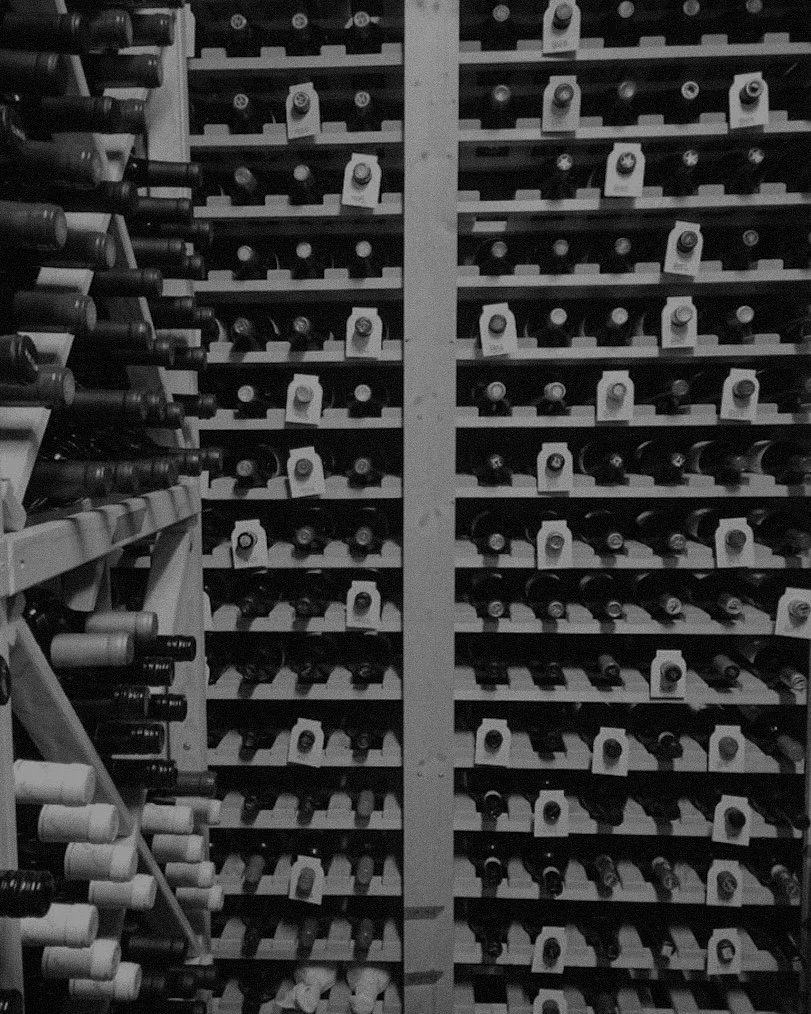
The boxes were heavy. The shelving didn’t exist—we built makeshift racks out of what we had. We unboxed and organized thousands of bottles in a space never designed to store them, built a working cellar from nothing, in two days.
That was just one of many operational failures in a building that everyone could see was beautiful, but nobody had actually designed to function as a restaurant. The architecture was stunning, and the design was sophisticated. But they built the operation for a photoshoot, not for people to work in it.
The Burden of Coherence
Because nobody else could see what needed to happen until it was breaking, that week taught me something that fifteen years in hospitality would confirm over and over: beautiful design without systems thinking creates impossible situations.
The people who see the whole system end up solving problems alone, under pressure, while everyone else watches the building function as if they’d designed it that way all along.
Here’s what I understand now that I didn’t understand then. A theoretical biologist named Ludwig von Bertalanffy spent his career proving something humans have always known intuitively but rarely act on: you cannot understand a system by looking at its parts in isolation. A system is a whole that functions as a whole in virtue of the relationships between its parts. Change one part and the whole responds. The whole is not the sum of its parts. It’s something entirely different.
A wine room doesn’t exist in isolation. It connects to inventory. Inventory connects to what you can actually serve. What you can serve connects to the wine list. The wine list connects to the wine program. The wine program connects to staff training. Staff training connects to service quality. Service quality connects to the dining experience. The dining experience connects to reputation and return customers.
The moment you really understand this—not just intellectually, but in your body—you start seeing breaks everywhere. You can’t unsee them. You become the person standing in a room full of people, building something beautiful, watching the structural cracks form in real time, unable to make anyone slow down long enough to fix it before the damage happens.
Somerset was gorgeous. The design was flawless. The architecture was stunning. But I could see the breaks forming before the doors even opened. I asked about the wine room for weeks. I wasn’t asking to be difficult. I was asking because I could see what was coming. And I had to watch it happen anyway.
Then I had to solve it, in a closet, in two days, while the rest of the building functioned as if I’d never said anything.
The Gap Between Knowing and Acting
I asked about the wine room for weeks. Not to be difficult. Not because I enjoyed the conversation. I asked because I could see what was coming. I could see the gap between what everyone wanted this restaurant to be and what the actual infrastructure could support. And I had to watch it happen anyway.
The wine room didn’t materialize because no one listened. Seeing a break forming isn’t the same as being able to stop it. Knowing what’s coming doesn’t give you the authority to slow everyone down. Understanding the system doesn’t mean anyone will let you redesign it before it fails.
So you watch. You watch the beautiful building open without a wine room. You watch good work get crushed under infrastructure that never could have held it. And then—only then—when the damage is visible to everyone, you get to fix it. You find the people willing to help you rebuild it right.
In a closet. In two days. With the ones who understood what needed to happen. That’s the gap. That’s where the real cost lives. In knowing and being powerless to act until the break is already happening.
Space to Move
But something shifts when a client finally says yes to that slowdown. When they trust that what you’re seeing is real, something becomes possible that wasn’t possible before.
I’m not talking about marginal improvements. I’m talking about the difference between a business that’s constantly putting out fires and a business where things actually flow, where there’s space to think, where growth doesn’t break you.
When you design the whole thing—when every process feeds into the next, when everything connects—the work becomes sustainable. Your clients move through without friction. Your team understands why things are done a certain way because they can see how it serves the whole. Your business doesn’t break under growth because it’s actually designed to hold it.
And there’s something else that happens. The person who’s been carrying the weight of knowing something’s wrong finally gets to breathe. You stop watching good work fall apart because nobody wanted to slow down. You get to build something that actually works the way you always knew it could.
That slowdown—that moment when someone decides that the structural problem is real and worth solving—that’s when everything changes.
You can keep moving the way you’re moving, optimizing pieces and wondering why the whole operation feels fragile—building something beautiful and watching it fracture under its own weight, hiring people and watching them struggle because you never designed the systems to absorb them.
Or you can change the structure. You can stop pretending that processes exist in isolation. You can admit that the structural problem is real, and you can build infrastructure that actually holds what you’re trying to create.
That’s not soft work. That’s not a quick fix. That’s a fundamental redesign. And it requires someone who can see the whole thing, hold it all at once, and design for how everything connects.
The choice is yours. But choose knowing this: beautiful design without systems thinking always fails. The only question is when, and how much it will cost you.